> For the complete documentation index, see [llms.txt](https://docs.apono.io/llms.txt). Markdown versions of documentation pages are available by appending `.md` to page URLs; this page is available as [Markdown](https://docs.apono.io/docs/additional-integrations/mcps/github-mcp.md).

# GitHub MCP

Connecting the GitHub MCP allows Apono Agent Privilege Guard to grant AI agents controlled, temporary access to GitHub resources. After completing the integration, you can create agentic access flows that govern how AI agents access your GitHub instance.

***

### Prerequisites

<table><thead><tr><th width="210.06640625">Item</th><th>Description</th></tr></thead><tbody><tr><td><strong>Apono Connector</strong></td><td><p>On-prem connection serving as a bridge between a GitHub instance and Apono:</p><ul><li><a href="/pages/U4HFH35XWDo3jyqhJqgQ">AWS</a></li><li><a href="https://docs.apono.io/docs/azure-environment/apono-connector-for-azure">Azure</a></li><li><a href="https://docs.apono.io/docs/gcp-environment/apono-connector-for-gcp">GCP</a></li><li><a href="/pages/p5PzUV4THznqePSTYgEH">Kubernetes</a></li></ul></td></tr><tr><td><strong>Agent Privilege Guard</strong></td><td>Agent Privilege Guard is enabled for your organization.</td></tr><tr><td><strong>GitHub OAuth app</strong></td><td><p>OAuth app registered to your GitHub organization</p><p>Learn how to create a <a href="https://docs.github.com/en/apps/oauth-apps/building-oauth-apps/creating-an-oauth-app">GitHub OAuth app</a>.</p></td></tr><tr><td><strong>GitHub Client ID</strong></td><td><p>Unique identifier of the GitHub OAuth app</p><p><br>Apono uses this ID in place of a secret during integration.</p></td></tr><tr><td><strong>GitHub OAuth Scopes</strong></td><td><p>GitHub permissions each user consents to, defining what the AI agent can access</p><p><br>Learn more about <a href="https://docs.github.com/en/apps/oauth-apps/building-oauth-apps/scopes-for-oauth-apps">scopes for OAuth apps</a>.</p></td></tr></tbody></table>

***

### Integrate the GitHub MCP

Follow these steps to complete the integration:

1. On the [**Catalog**](https://app.apono.io/catalog?search=github+mcp) tab, click **GitHub (MCP OAuth)**. The **Connect Integration** page appears.
2. Under **Discovery**, click **Next**. The **Apono connector** section expands.
3. From the dropdown menu, select a connector. Choosing a connector links Apono to all the services available on the account where the connector is located.

{% hint style="success" %}
If the desired connector is not listed, click **+ Add new connector** and follow the instructions for creating a connector ([AWS](/docs/aws-environment/apono-connector-for-aws.md), [Azure](/docs/azure-environment/apono-connector-for-azure.md), [GCP](/docs/gcp-environment/apono-connector-for-gcp.md), [Kubernetes](/docs/kubernetes-environment/apono-connector-for-kubernetes.md)).
{% endhint %}

4. Click **Next**. The **Integration Config** section expands.
5. Define the **Integration Config** settings.

   <table><thead><tr><th width="210">Setting</th><th>Description</th></tr></thead><tbody><tr><td><strong>Integration Name</strong></td><td>Unique, alphanumeric, user-friendly name used to identify this integration when constructing an access flow</td></tr><tr><td><strong>GitHub Client ID</strong></td><td>Unique identifier of the GitHub OAuth app</td></tr><tr><td><strong>GitHub OAuth Scopes</strong></td><td><p>GitHub permissions each user consents to, defining what the AI agent can access</p><p><br><strong>Example</strong> (comma-separated list): <em>repo,read:org,read:user</em></p></td></tr></tbody></table>
6. Click **Next**. The **Get more with Apono** section expands.
7. Define the **Get more with Apono** settings.

   <table><thead><tr><th width="209">Setting</th><th>Description</th></tr></thead><tbody><tr><td><strong>Custom Access Details</strong></td><td>(Optional) Instructions explaining how to access this integration's resources<br><br>Upon accessing an integration, a message with these instructions will be displayed to end users in the User Portal. The message may include up to <strong>400 characters</strong>.<br><br>To view the message as it appears to end users, click <strong>Preview</strong>.</td></tr><tr><td><strong>Integration Owner</strong></td><td><p>(Optional) Fallback approver if no <a href="/pages/Ey4wuziyr2BzKYQnd5am">resource owner</a> is found<br><br>Follow these steps to define one or several integration owners:</p><ol><li>From the <strong>Attribute</strong> dropdown menu, select <strong>User</strong> or <strong>Group</strong> under the relevant identity provider (IdP) platform.</li><li>From the <strong>Value</strong> dropdown menu, select one or multiple users or groups.</li></ol><p><br><strong>NOTE</strong>: When <strong>Resource Owner</strong> is defined, an <strong>Integration Owner</strong> must be defined.</p></td></tr><tr><td><strong>Resource Owner</strong></td><td><p>(Optional) Group or role responsible for managing access approvals or rejections for the resource<br><br>Follow these steps to define one or several <a href="/pages/Ey4wuziyr2BzKYQnd5am">resource owners</a>:</p><ol><li>Enter a <strong>Key name</strong>. This value is the name of the tag created in your cloud environment.</li><li>From the <strong>Attribute</strong> dropdown menu, select an attribute under the IdP platform to which the key name is associated.<br><br>Apono will use the value associated with the key (tag) to identify the resource owner. When you update the membership of the group or role in your IdP platform, this change is also reflected in Apono.</li></ol><p><br><strong>NOTE</strong>: When this setting is defined, an <strong>Integration Owner</strong> must also be defined.</p></td></tr></tbody></table>
8. (Recommended) Click **Test Integration** to validate the integration.

{% hint style="info" %}
**Test Integration** is available after you have entered or selected values for all required integration fields.

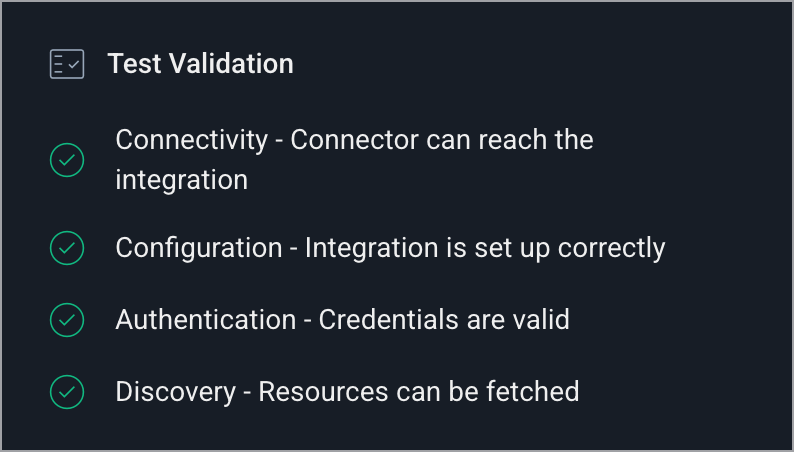
During the test, Apono runs the following validation checks:

* **Connectivity:** The connector can reach the integration.
* **Configuration:** The integration is set up correctly.
* **Authentication:** The credentials are valid.
* **Discovery:** Resources can be fetched.

The **Test Validation** checklist shows the result of each check.

<img src="/files/ODqRkUwvqKuEtRqYQKaz" alt="" data-size="original">

If a check fails, Apono identifies the failed check and highlights the fields that need correction.
{% endhint %}

9. Click **Confirm**.

Now that you have completed the integration, you can [create an agentic access](/docs/agent-privilege-guard/set-up-apono-agent-privilege-guard/apono-agent-privilege-guard-for-github.md#create-an-agentic-access-flow) flow that grants permission to your GitHub instance.


---

# Agent Instructions
This documentation is published with GitBook. GitBook is the documentation platform designed so that both humans and AI agents can read, navigate, and reason over technical content effectively. Learn more at gitbook.com.

## Querying This Documentation
If you need additional information that is not directly available in this page, you can query the documentation dynamically by asking a question.

Perform an HTTP GET request on the current page URL with the `ask` query parameter, and the optional `goal` query parameter:

```
GET https://docs.apono.io/docs/additional-integrations/mcps/github-mcp.md?ask=<question>&goal=<endgoal>
```

`ask` is the immediate question: it should be specific, self-contained, and written in natural language.
`goal` is optional and describes the broader end goal you are ultimately trying to accomplish on behalf of the user. GitBook uses it to tailor the answer towards what is most useful for that goal.

The response will contain a direct answer to the question and relevant excerpts and sources from the documentation.

Use this mechanism when the answer is not explicitly present in the current page, you need clarification or additional context, or you want to retrieve related documentation sections.