# Manage an access scope

Access scopes let you group resources based on defined criteria so you can reuse them across access flows.

By viewing, updating, duplicating, or deleting scopes as needed, you can ensure they remain accurate, relevant, and aligned with your security requirements.

***

### ​​View an existing access scope

You can view an existing access scope to see which resources match its criteria, check which access flows use it, and review its history before making changes or reusing it.

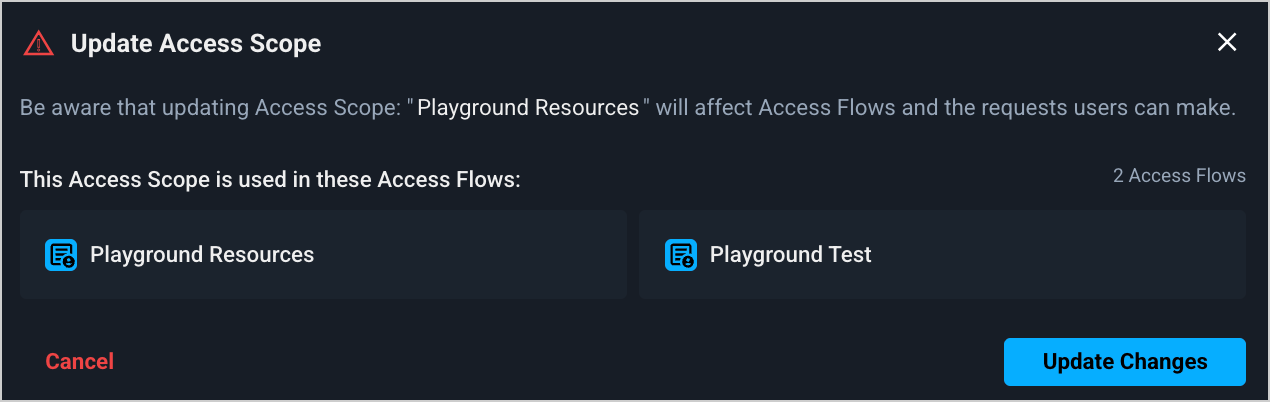
<figure><img src="https://1094436629-files.gitbook.io/~/files/v0/b/gitbook-x-prod.appspot.com/o/spaces%2Fv6MBfUGvblSdAz31yJXm%2Fuploads%2Fgit-blob-a156ee5b05713872a42eb97685fdf6dac20898d8%2Faccess-scope-details.png?alt=media" alt="" width="563"><figcaption><p>Access Scope Details panel</p></figcaption></figure>

Follow these steps to view an access scope:

1. On the [**Access Scopes**](https://app.apono.io/access-scopes) page, under **Access Scope**, click the access scope name to view a list of resources filtered by the criteria of the access scope.

{% hint style="success" %}
If your list of access scopes is long, you can filter the list in the following ways:

* Enter the name of the access scope in the search field to filter the list.
* If [Space Management](https://docs.apono.io/docs/user-administration/space-management) is enabled, select a space from the space selector at the top of the page to show only the resources for that space.
  {% endhint %}

2. Click **More Details** to view the history of the access scope. The **Access Scope Details** panel opens displaying the following information:
   * Name
   * Description
   * Creation Date
   * Created By
   * Updated Date
   * Updated By
   * List of access flows configured with the access scope
3. Click **X** in the right corner to close the panel.

***

### Update an access scope

You can update an access scope to refine its criteria and ensure it only captures the intended resources.

{% hint style="danger" %}
Before updating an access scope, remember the following:

* Ensure that the access scope criteria are **narrowly defined**. Access scopes automatically adjust as new resources matching your criteria are identified across integrations. Broad or overly permissive criteria may inadvertently grant unauthorized user access.
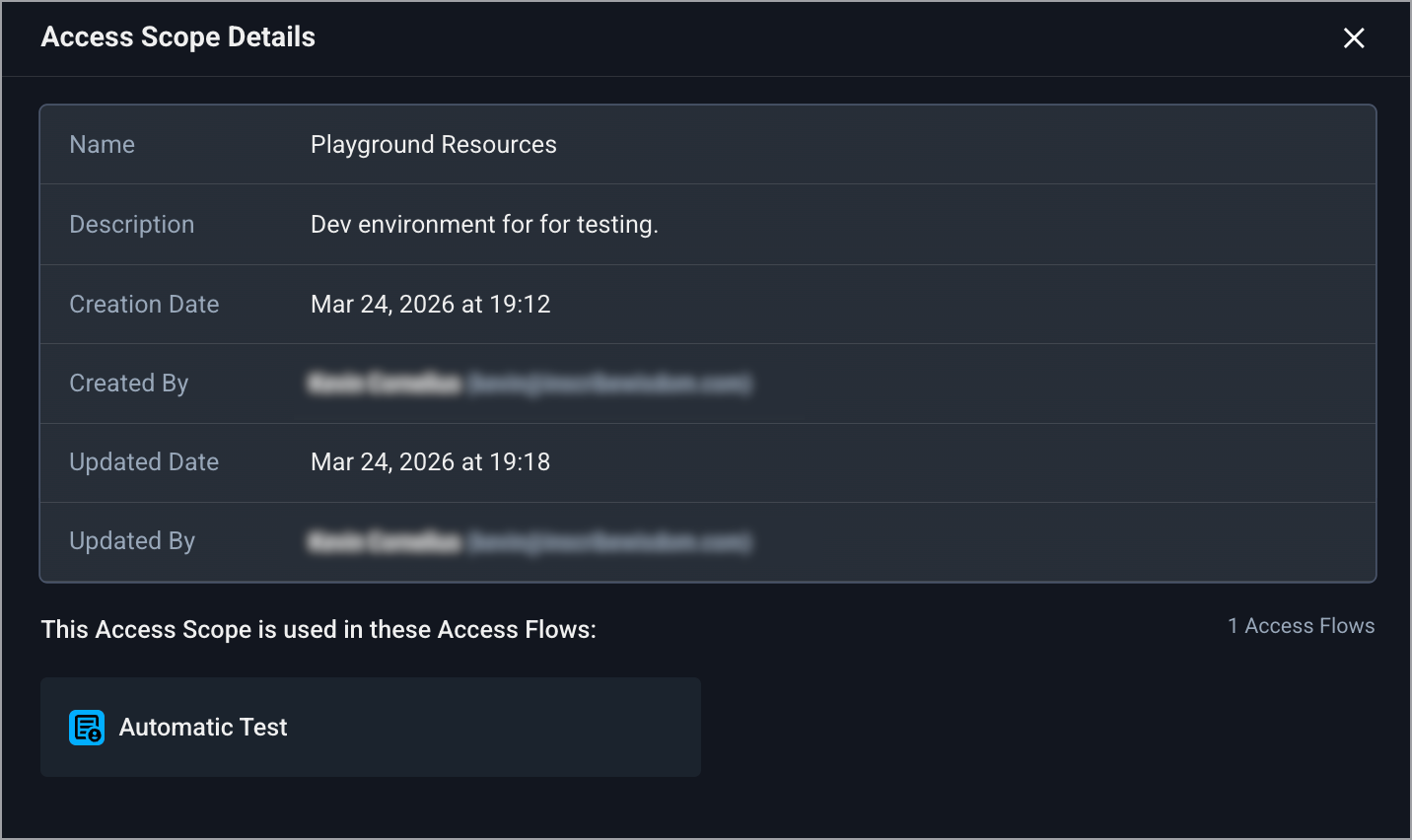
* Any updates will impact associated access flows and future requests users can make.
  {% endhint %}

<figure><img src="https://1094436629-files.gitbook.io/~/files/v0/b/gitbook-x-prod.appspot.com/o/spaces%2Fv6MBfUGvblSdAz31yJXm%2Fuploads%2Fgit-blob-7ae8d3434f6f0c78d784a90ce674eb63e92ee480%2Faccess-scope-update.png?alt=media" alt="" width="563"><figcaption><p>Update Access Scope pop-up window</p></figcaption></figure>

Follow these steps to update an access scope:

1. On the [**Access Scopes**](https://app.apono.io/access-scopes) page, under **Access Scope**, click the access scope name. A list of resources appears filtered by the criteria of the access scope.

{% hint style="success" %}
If your list of access scopes is long, you can filter the list in the following ways:

* Enter the name of the access scope in the search field to filter the list.
* If [Space Management](https://docs.apono.io/docs/user-administration/space-management) is enabled, select a space from the space selector at the top of the page to show only the *access scopes* for that space.
  {% endhint %}

2. Adjust the [Basic filters](https://docs.apono.io/docs/inventory#filter-resources) or the [Apono Query Language (AQL)](https://docs.apono.io/docs/inventory/apono-query-language) query.
3. Click <img src="data:image/png;base64,iVBORw0KGgoAAAANSUhEUgAAAB4AAAAcCAYAAAB2+A+pAAACK0lEQVR4AeyWva8hURjGn+tGfHaiEd8hETqdjkhEJyolUUhEKVFItEQjWgp/gEriK0GlohC9oEMjFBJExF3n3Mtas5i57GaLncxzPt455/ll3pzMvLyPq2u5XH7M5/OntVqtrpx/nfLwdQ0GA2SzWSSTSaTT6aeVSqUwGo2+3JndGVytViEWixEMBhEKhZ6WVqtFoVC4CafgY3oxm81gt9thMplgMBieViAQwD04Be/3e5qL9/d32r+i4fP5uAen4N+B1us1hsMha00mE4bNPfhNMDHK5/NgK3JGGORj4ARXKpUoFovHyOd9E/z5+DUtgev1ehwOh7PhXwGfaReDfw+sUCjg9/tZy+VyXbzP4+HNN5ZIJLBYLKyl1Wof0y5W3ARfrPkjw/9gVmkdj8eoVCpoNBpYLBas9lwv4pzqTqeDXC6HdruNVquFTCaD6XR67ftwzgl8/JWjVquB9Cfn3W6HZrN5mrLuOYE3mw222y3DnPxWGcEHAU5gUijI5XKGpUajYcQeBTiBiZnP54NUKiVDKpVKBbfbTcdcGs5gtVqNWCxGS6RwOIxIJAKRSMSFSddyBpNdQqGQlkg6nQ483rcs8L1dhP6kKJik6u3tDeTUPul3czsppQjntICCyWExGo0ol8uo1+v0i0S+Sq9SqVRCr9eD1Wo9cX+m2uv1wmw2o9/vo9vtvlSksHc6nbDZbEywTCaDx+NBPB5HIpF4qaLRKBwOBwQCwRn8AwAA//8ivCN4AAAABklEQVQDAPbn99Bk7EGeAAAAAElFTkSuQmCC" alt="" data-size="line"> (save icon) to update the access scope. The **Update Access Scope** pop-up window appears.
4. Click **Update Changes**.

***

### Duplicate an access scope

You can duplicate an access scope to create a new scope from existing criteria and then adjust it as needed for your requirements.

{% hint style="danger" %}
Ensure that the access scope criteria are **narrowly defined**. Access scopes automatically adjust as new resources matching your criteria are identified across integrations. Broad or overly permissive criteria may inadvertently grant unauthorized user access.
{% endhint %}
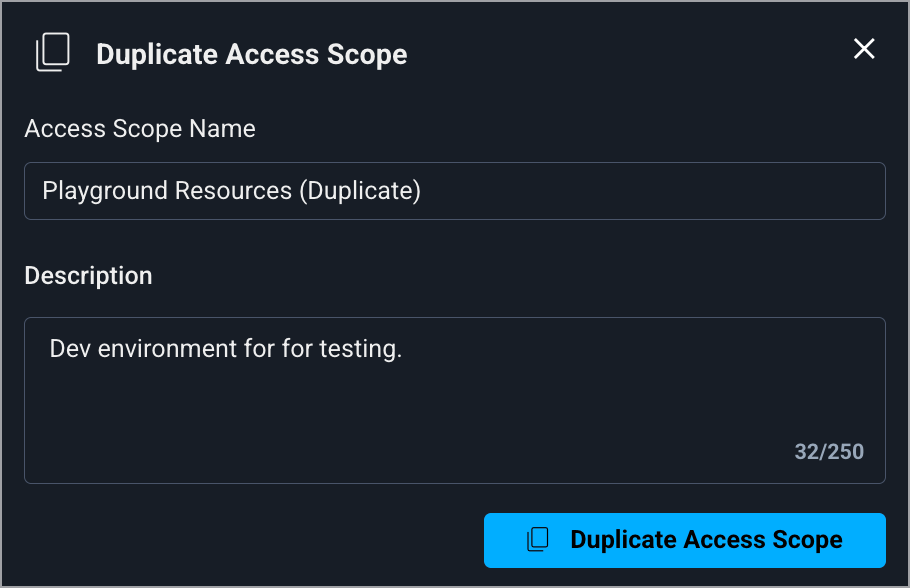
<figure><img src="https://1094436629-files.gitbook.io/~/files/v0/b/gitbook-x-prod.appspot.com/o/spaces%2Fv6MBfUGvblSdAz31yJXm%2Fuploads%2Fgit-blob-0ca292e1a70df29ed4c46de02d01d87fc833120e%2Faccess-scope-duplicate-new.png?alt=media" alt="" width="375"><figcaption><p>Duplicate Access Scope pop-up window</p></figcaption></figure>

Follow these steps to duplicate an access scope:

1. On the [**Access Scopes**](https://app.apono.io/access-scopes) page, under **Access Scope**, click the access scope name. A list of resources appears filtered by the criteria of the access scope.

{% hint style="success" %}
If your list of access scopes is long, you can filter the list in the following ways:

* Enter the name of the access scope in the search field to filter the list.
* If [Space Management](https://docs.apono.io/docs/user-administration/space-management) is enabled, select a space from the space selector at the top of the page to show only the resources for that space.
  {% endhint %}

2. Click **︙ > Duplicate**. The **Duplicate Access Scope** pop-up window appears.
3. Enter a new **Access Scope Name**.
4. Enter a new **Description**.
5. Click **Duplicate Access Scope**. The access scope is duplicated.
6. Adjust the [Basic filters](https://docs.apono.io/docs/inventory#filter-resources) or the [Apono Query Language (AQL)](https://docs.apono.io/docs/inventory/apono-query-language) query.
7. Click <img src="data:image/png;base64,iVBORw0KGgoAAAANSUhEUgAAAB4AAAAcCAYAAAB2+A+pAAACK0lEQVR4AeyWva8hURjGn+tGfHaiEd8hETqdjkhEJyolUUhEKVFItEQjWgp/gEriK0GlohC9oEMjFBJExF3n3Mtas5i57GaLncxzPt455/ll3pzMvLyPq2u5XH7M5/OntVqtrpx/nfLwdQ0GA2SzWSSTSaTT6aeVSqUwGo2+3JndGVytViEWixEMBhEKhZ6WVqtFoVC4CafgY3oxm81gt9thMplgMBieViAQwD04Be/3e5qL9/d32r+i4fP5uAen4N+B1us1hsMha00mE4bNPfhNMDHK5/NgK3JGGORj4ARXKpUoFovHyOd9E/z5+DUtgev1ehwOh7PhXwGfaReDfw+sUCjg9/tZy+VyXbzP4+HNN5ZIJLBYLKyl1Wof0y5W3ARfrPkjw/9gVmkdj8eoVCpoNBpYLBas9lwv4pzqTqeDXC6HdruNVquFTCaD6XR67ftwzgl8/JWjVquB9Cfn3W6HZrN5mrLuOYE3mw222y3DnPxWGcEHAU5gUijI5XKGpUajYcQeBTiBiZnP54NUKiVDKpVKBbfbTcdcGs5gtVqNWCxGS6RwOIxIJAKRSMSFSddyBpNdQqGQlkg6nQ483rcs8L1dhP6kKJik6u3tDeTUPul3czsppQjntICCyWExGo0ol8uo1+v0i0S+Sq9SqVRCr9eD1Wo9cX+m2uv1wmw2o9/vo9vtvlSksHc6nbDZbEywTCaDx+NBPB5HIpF4qaLRKBwOBwQCwRn8AwAA//8ivCN4AAAABklEQVQDAPbn99Bk7EGeAAAAAElFTkSuQmCC" alt="" data-size="line"> (save icon) to update the access scope.

{% hint style="info" %}
If [Space Management](https://docs.apono.io/docs/user-administration/space-management) is enabled, the duplicate is created in the same location as the original, either within the same space or at the global account level.
{% endhint %}

***

### Delete an access scope

You can delete an access scope when it is no longer needed or used in any access flows.

{% hint style="danger" %}
Deleting an access scope is permanent.
{% endhint %}

Follow these steps to delete an access scope:

1. On the [**Access Scopes**](https://app.apono.io/access-scopes) page, under **Access Scope**, click the access scope name. A list of resources appears filtered by the criteria of the access scope.

{% hint style="success" %}
If your list of access scopes is long, you can enter the name of the access scope in the search field to filter the list.
{% endhint %}

2. Click **︙ > Delete**. A confirmation pop-up window appears.

{% hint style="info" %}
An access scope can only be deleted if it is not associated with an access flow. If an access scope is linked to one or more access flows, a popup window will appear with links to the relevant access flows:

1. Click each link to open the associated access flow.
2. Remove the access scope from the access flow.

After you have removed the access scope from all access flows, return to the **Inventory** page to delete the access scope.
{% endhint %}

3. Click **Yes**. The access scope is deleted.