> For the complete documentation index, see [llms.txt](https://docs.apono.io/llms.txt). Markdown versions of documentation pages are available by appending `.md` to page URLs; this page is available as [Markdown](https://docs.apono.io/docs/connectors-and-secrets/manage-connectors.md).
# Manage connectors
Find, rename, uninstall, and delete an existing Apono connector
After installing a connector in your [AWS](/docs/aws-environment/apono-connector-for-aws.md), [Azure](/docs/azure-environment/apono-connector-for-azure.md), [GCP](/docs/gcp-environment/apono-connector-for-gcp.md), or [Kubernetes](/docs/kubernetes-environment/apono-connector-for-kubernetes.md) environment, you can use the Apono UI to find, rename, and delete it.
You can also uninstall the connector from the environment where it is deployed.
***
### Find a connector
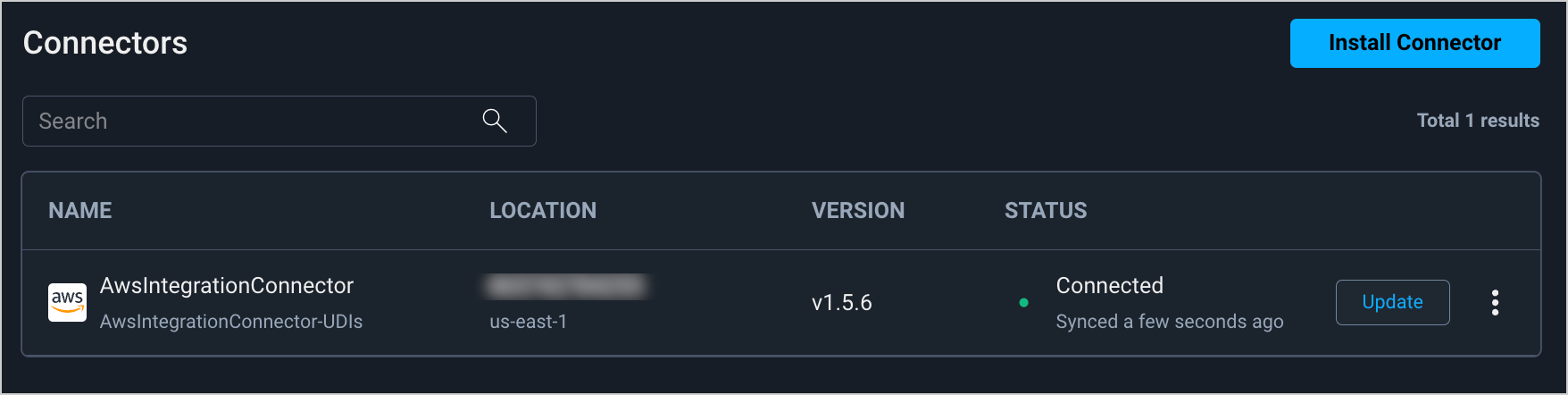
You can search for a connector to view its related information.
Connectors page
Follow this step to locate a connector in the Apono UI:
1. On the [**Connectors**](https://app.apono.io/connectors) page, in the search bar, enter the name of the connector. All matching connectors appear.
{% hint style="info" %}
The **Connectors** tab displays context information related to each connector:
* Name
* Location
* Version
* Status
This information is intended to help you quickly identify specific connectors.
{% endhint %}
***
### Rename a connector
{% hint style="danger" %}
If you change the name of a connector in the Apono UI, you must also change the `connector_id` param in the installed connector.
**Failure to update the `connector_id` will cause the integration to stop working.**
{% endhint %}
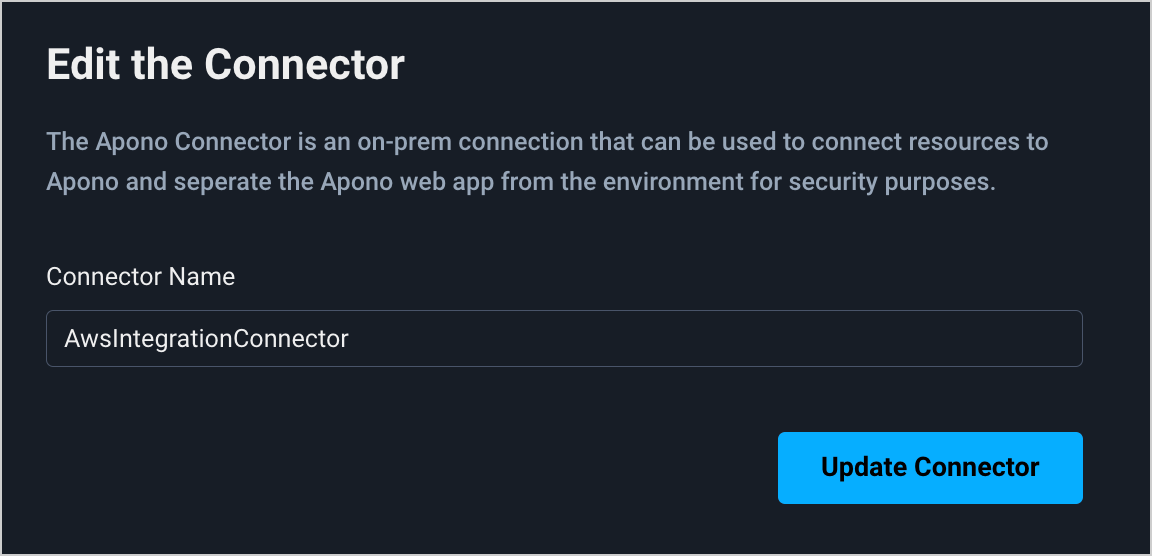
Edit the Connector page
Follow these steps to rename a connector:
1. On the [**Connectors**](https://app.apono.io/connectors) page, in the search bar, enter the name of the connector. All matching connectors appear.
2. In the row of the connector, click ⠇**> Edit**. The **Edit the Connector** page for the connector appears.
3. Update the **Connector Name**.
4. Click **Update Connector**.
***
### Uninstall a connector
Uninstalling a connector removes its deployment and, where applicable, related resources from the environment where it is installed.
Uninstallation steps vary by environment and installation method. Select the tab for the environment where the connector is installed.
{% hint style="danger" %}
Before you begin, revoke all access requests that use the connector. This prevents active access from relying on a connector that is no longer available.
{% endhint %}
{% tabs %}
{% tab title="AWS" %}
The uninstallation process depends on whether the connector is installed in Amazon ECS or Amazon EKS.
**Amazon ECS**
For a connector installed using AWS CloudFormation, delete the CloudFormation stack that installed the connector:
* [**AWS account**](/docs/aws-environment/apono-connector-for-aws.md#aws-account-connector): Delete the CloudFormation stack that installed the connector.
* **AWS organization**:
* [Management account installation](/docs/aws-environment/apono-connector-for-aws.md#aws-organization-connector-on-the-management-account): Delete the CloudFormation stack that installed the connector.
* [Assumable permissions account installation](/docs/aws-environment/apono-connector-for-aws.md#connector-with-iam-role-permissions-for-aws-organization-management):
* Delete the CloudFormation stack that installed the connector in the assumable permissions account.
* Delete the CloudFormation stack that installed the connector roles in the management account.
Follow these steps:
1. [Delete the stack](https://docs.aws.amazon.com/AWSCloudFormation/latest/UserGuide/cfn-console-delete-stack.html).
2. If the connector was installed in an assumable permissions account, delete the CloudFormation stack that installed the connector roles in the management account.
***
**Amazon EKS**
For a connector [installed on Amazon EKS using CloudFormation](/docs/aws-environment/apono-connector-for-aws/installing-a-connector-on-eks-using-cloudformation.md), follow these steps:
1. Connect to the EKS cluster where the connector is installed.
2. Switch to the namespace where the connector is installed.
3. Uninstall the Apono connector.
{% code overflow="wrap" expandable="true" %}
```shellscript
helm uninstall apono-connector
```
{% endcode %}
4. (Optional) [Delete the CloudFormation stack](https://docs.aws.amazon.com/AWSCloudFormation/latest/UserGuide/cfn-console-delete-stack.html) that installed the connector roles.
{% endtab %}
{% tab title="GCP" %}
The uninstallation process depends on whether the connector is installed in Cloud Run or Google Kubernetes Engine.
**Cloud Run**
For a connector [installed in Cloud Run](/docs/gcp-environment/apono-connector-for-gcp/installing-a-gcp-connector-for-cloud-run.md), follow these steps:
1. [Delete the Cloud Run service](https://docs.cloud.google.com/run/docs/managing/services#delete).
2. Delete the connector service account:
1. Open the IAM dashboard in Google Cloud.
2. Find the connector service account. Its name usually begins with *apono-connector-iam-sa*.
3. [Delete the service account](https://docs.cloud.google.com/iam/docs/service-accounts-delete-undelete).
***
**Google Kubernetes Engine**
For a connector [installed in Google Kubernetes Engine](/docs/gcp-environment/apono-connector-for-gcp/installing-a-gcp-connector-with-helm.md), follow these steps:
1. Uninstall the connector from the GKE cluster:
1. Connect to the GKE cluster where the connector is installed.
2. Switch to the namespace where the connector is installed.
3. Uninstall the Apono connector.
{% code overflow="wrap" expandable="true" %}
```shellscript
helm uninstall apono-connector
```
{% endcode %}
2. Delete the connector service account:
1. Open the IAM dashboard in Google Cloud.
2. Find the connector service account. Its name usually begins with *apono-connector-iam-sa*.
3. [Delete the service account](https://docs.cloud.google.com/iam/docs/service-accounts-delete-undelete).
{% endtab %}
{% tab title="Azure" %}
For a connector [installed in Azure Container Instances](/docs/azure-environment/apono-connector-for-azure/install-azure-connector-on-aci-using-azure-cli.md), follow these steps:
1. Open the Container Instances dashboard in Azure.
2. Find and select the container instance that runs the connector.
3. Delete the container instance.
{% endtab %}
{% endtabs %}
After uninstalling the connector from its environment, [delete the connector](#delete-a-connector) from Apono.
***
### Delete a connector
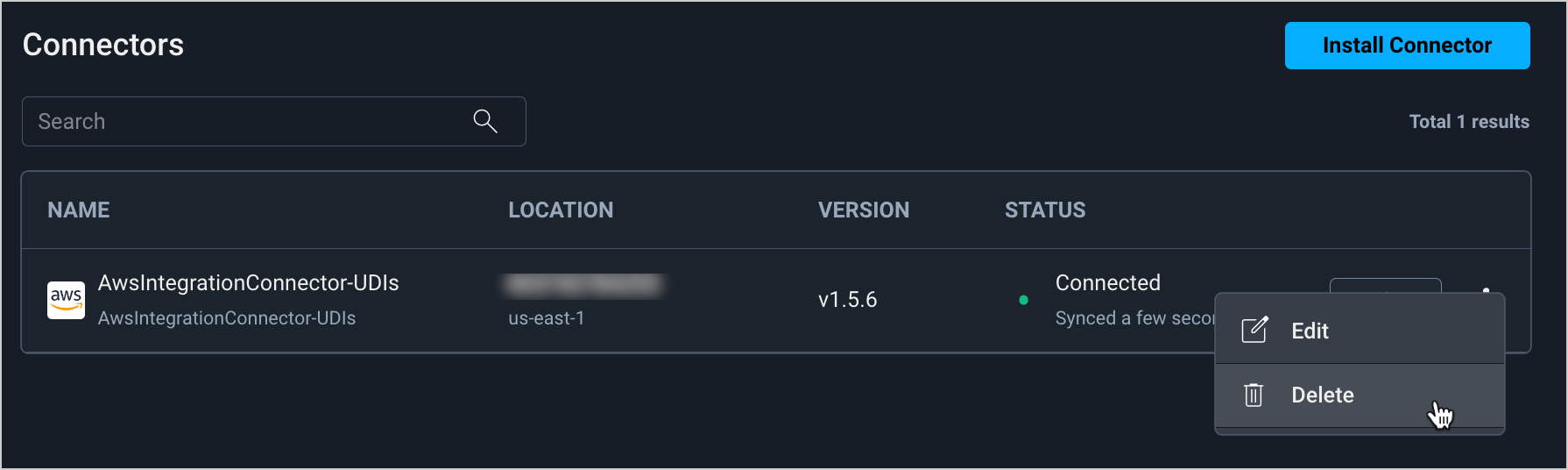
Deleting a connector
Follow these steps to delete a connector:
1. [Remove the connector within your cloud environment](#uninstall-a-connector).
2. On the [**Connectors**](https://app.apono.io/connectors) page, in the search bar, enter the name of the connector. All matching connectors appear.
3. In the row of the connector, click ⠇**> Delete**. A confirmation popup window appears.
{% hint style="info" %}
If the connector is associated with one or more integrations, a popup window will appear with a link to show the integrations:
1. Click **Show Integrations** to see the list of associated integrations.
2. For each integration, [delete the integration](/docs/connectors-and-secrets/manage-integrations.md#delete-an-integration).
{% endhint %}
3. Click **Yes**.
---
# Agent Instructions
This documentation is published with GitBook. GitBook is the documentation platform designed so that both humans and AI agents can read, navigate, and reason over technical content effectively. Learn more at gitbook.com.
## Querying This Documentation
If you need additional information that is not directly available in this page, you can query the documentation by asking a question.
Perform an HTTP GET request on the following URL with the `ask` and `goal` query parameters:
```
GET https://docs.apono.io/docs/connectors-and-secrets/manage-connectors.md?ask=&goal=
```
`ask` is the immediate question: it should be specific, self-contained, and written in natural language.
`goal` is what the user is ultimately trying to achieve, the reason they need the answer. Sharing it helps GitBook give you a better, more relevant answer. A goal is most helpful when it describes the outcome the user wants rather than restating the question. For example, with `ask=how do I create an API token`, a goal like `automate deployments from our CI pipeline` lets GitBook tailor the answer to that use case.
The response will contain a direct answer to the question and relevant excerpts and sources from the documentation.
Use this mechanism when the answer is not explicitly present in the current page, you need clarification or additional context, or you want to retrieve related documentation sections.